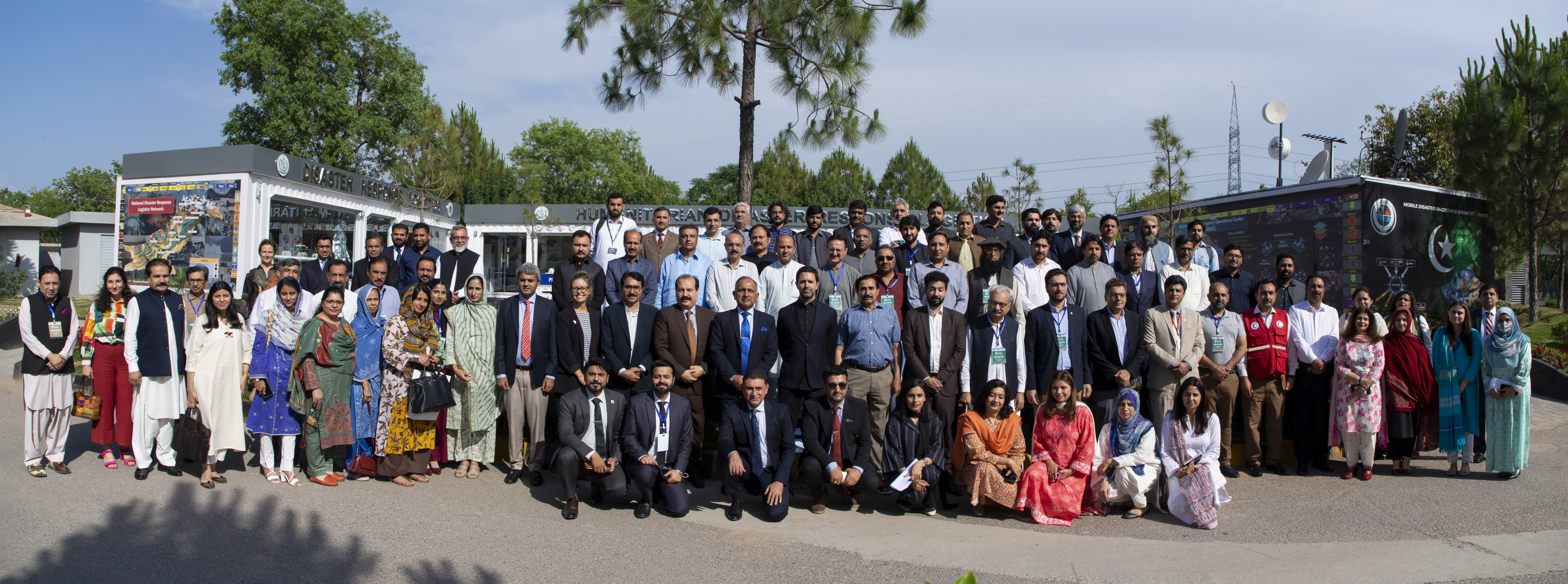
The 2nd National Dialogue Platform (NDP) on Anticipatory Action in Pakistan was convened on 11-12 May 2026 to advance national coordination, harmonization and institutionalization of anticipatory action within Pakistan's disaster risk management architecture. The event brought together government institutions, United Nations agencies, Red Cross and Red Crescent Movement partners, international and national NGOs, technical agencies, academia, private-sector actors and development partners to discuss how Pakistan can move from fragmented pilots toward a coherent, government-led anticipatory action system.
Across two days, the dialogue addressed the full chain required for effective anticipatory action: risk information, forecasting, impact-based early warning, trigger development, operational readiness, localization, disaster risk financing, sectoral integration and institutional governance. Day 1 established the strategic and institutional framing for anticipatory action in Pakistan, with sessions on national alignment, monsoon outlooks, Pakistan's AA journey, education-related anticipatory action, harmonization, community-based disaster risk management and institutionalization. Day 2 moved the discussion toward operational systems, including global and regional AA trends, EW4All and last-mile dissemination, disaster risk financing, sectoral and hazard-specific integration, a NEOC demonstration and closing reflections on commitments from the 1st NDP.
The dialogue repeatedly emphasized that anticipatory action is not a stand-alone humanitarian activity. It requires strong public leadership, technical credibility, clear triggers, pre-arranged financing, local delivery systems, risk-informed planning, social protection linkages and downward accountability to at-risk communities. Participants also underlined that forecasting must be translated into practical decisions through pre-agreed protocols, timely dissemination and early measures that protect lives, livelihoods, education continuity and essential services before hazards become disasters.
The event produced a strong consensus around the need to harmonize AA frameworks and tools, strengthen national and provincial coordination, improve data and evidence systems, expand impact-based forecasting, create rapid-release financing arrangements, integrate AA into district and sectoral plans and scale localized delivery models. The discussions also highlighted critical gaps, including weak district-level capacity, fragmented data systems, limited pre-arranged financing, short forecast lead times for certain hazards, uneven last-mile connectivity, and the need for more systematic inclusion of women, children, persons with disabilities and marginalized communities in AA design.